


Sxgram Didn't Come Out of Y Combinator. It Came Out of Frustration.
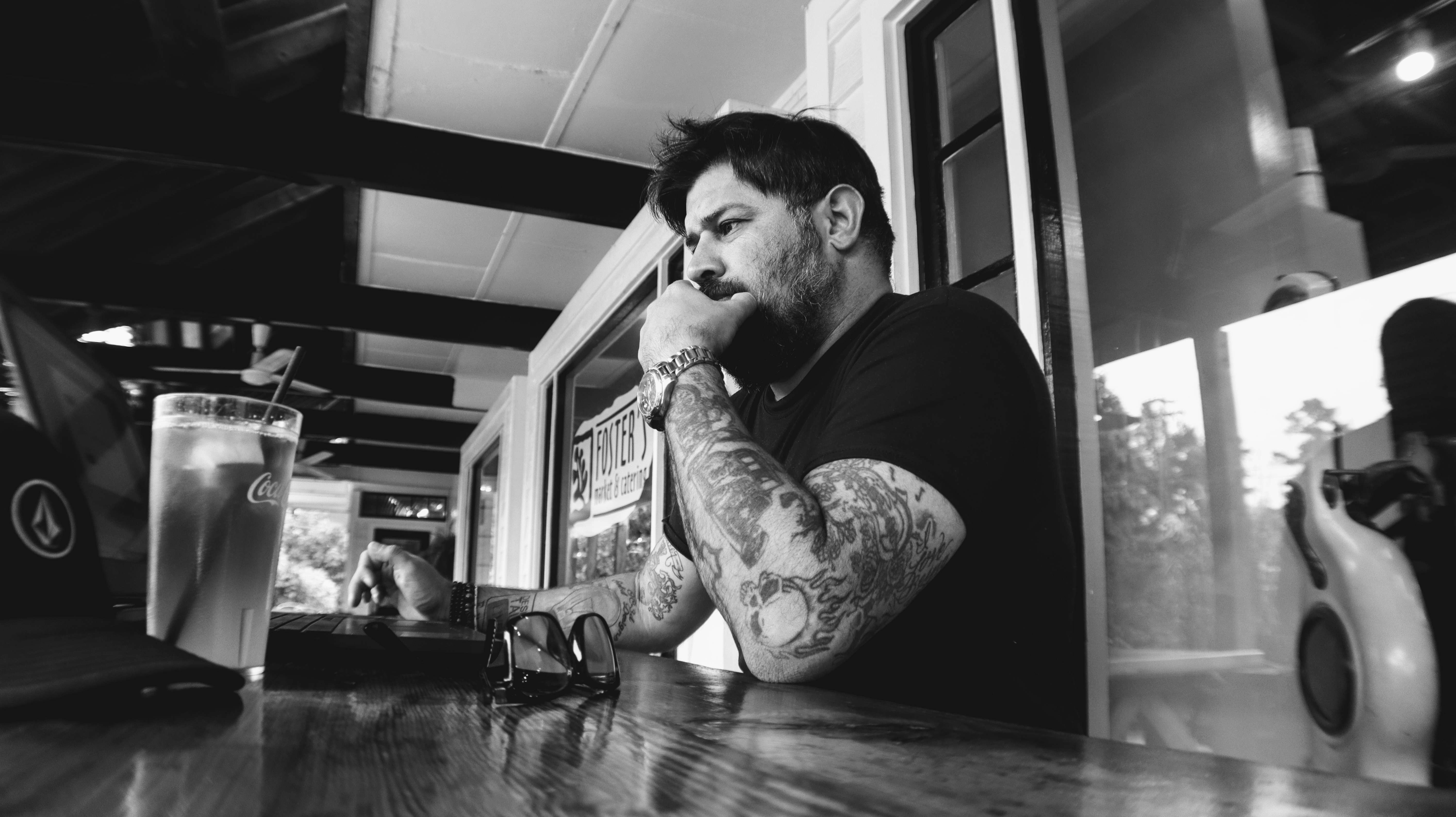
The Sxgram Story Isn't the One You're Used To
There's a startup story we've all been conditioned to celebrate. A founder gets into Y Combinator or Techstars, relocates to Silicon Valley, spends a few months surrounded by investors and mentors, and eventually stands on stage at Demo Day explaining how they're going to change the world. Photos at SXSW. A seed round announcement. A place in the mythology that's built up around startup culture over the last twenty years.
I get the appeal. Getting into an accelerator is validation — proof that someone with a track record looked at your idea and said, "yes, this deserves to exist."
There's comfort in knowing a company was carefully vetted and introduced into an ecosystem built to help it succeed. And the data backs that comfort up: companies that go through accelerator programs tend to see meaningfully lower failure rates than companies that don't, with some industry research putting the reduction somewhere in the 10 to 15% range, largely thanks to structured mentorship and a built-in network of introductions. That's not nothing. For a first-time founder, a warm introduction to the right investor can be the difference between a company that gets a real shot and one that quietly runs out of runway.
Social platforms rarely play by those rules, though — and the numbers explain why investors approach them so differently than they approach, say, a B2B SaaS tool or a logistics platform.

The category that eats capital and founders alike
Launching a social platform is one of the rarest things a founder can attempt, and it isn't close. There are millions of software companies out there, hundreds of thousands of SaaS businesses, countless marketplaces — and yet most people could name the handful of social platforms that actually made it on one hand. Facebook, LinkedIn, Reddit, Instagram, TikTok, Snapchat, Pinterest, X, Threads, Discord, maybe a few more. That's basically the whole list, and most of those names are now twenty or fifteen years old. The "new" entrants on that list — Threads, BeReal-style apps, the privacy-focused alternatives that popped up after 2018 — are a thin slice of a much larger graveyard.
One analysis of failed venture-backed startups found that social media ventures made up about 8% of all startup failures in the dataset, and that small slice collectively burned through more than $4 billion in venture capital before shutting down. Among those failures, roughly two-thirds — about 66% — died because of competition, meaning they either got cloned by an incumbent with more users and more capital, or they simply couldn't out-distribute platforms that already had the audience. Close to one in five died because the market simply never wanted what they were building in the first place. And the ones that did survive long enough to fail "slowly" rather than "fast" had an average lifespan of around four and a half years from founding to shutdown — long enough to raise a seed round, maybe a Series A, hire a team, and still end up as a cautionary tale.
The reason is simple, even if the economics behind it are brutal: social platforms live or die on network effects, and network effects are a paradox. People don't join empty rooms. They join places where conversations are already happening — but those conversations can't happen until people show up. Researchers who've tried to quantify this have found that the value a person gets from a social platform is heavily tied to their direct connections on it; one recent academic estimate suggested that somewhere between 20 and 34% of the total value users get from major platforms comes specifically from those local, person-to-person network effects, not from the platform's features or content library. Put another way, the feed isn't the product. The people already in the room are the product. And you can't manufacture that on day one, no matter how good your roadmap looks in the pitch deck.
That paradox has quietly killed thousands of social startups before they ever found traction.
Where Sxgram actually came from
Sxgram didn't come from an accelerator. There was no Demo Day, no pitch competition, no investor writing a check against a polished deck full of projections. No hoodies, no networking events, no stage.
It came out of frustration — specifically, mine, with being shadow banned.
At the time I was publishing magazines, writing articles, interviewing creators, producing podcasts, and trying to grow businesses online. I kept wondering whether some word, phrase, or image was quietly tripping an algorithm and tanking my reach. Entire industries were expected to build their livelihoods on platforms that depended on their participation while seemingly being embarrassed to admit those industries existed at all.
This isn't a fringe complaint, either. By 2026, the broader creator economy — every photographer, newsletter writer, YouTuber, fitness influencer, and adult content creator monetizing an audience online — is estimated to be worth somewhere in the neighborhood of $190 to $235 billion globally, with projections putting it above half a trillion dollars by the end of the decade. More than 200 million people worldwide now identify as content creators in some form, and tens of millions of them in the U.S. alone do it as a primary or significant source of income. That's not a hobbyist economy anymore. It's a labor market. And a meaningful share of it runs on platforms that can suspend an account, throttle its reach, or quietly bury it in search with no appeal process and no human to call.
As an adult, that bothered me. As a business owner, it frustrated me. As someone who'd spent years helping entrepreneurs build companies, it just stopped making sense. Why were adults running legitimate businesses forced to navigate invisible rules, algorithmic penalties, and subjective moderation just to tell people they existed? Why did creators and professionals have to spend years building audiences they could lose overnight, with no warning and no real explanation?
At first, Sxgram wasn't trying to solve any of that. It was just supposed to be a place where people could post, tell their stories, promote themselves, and talk to each other without feeling judged for it. I wasn't trying to become the next Zuckerberg, and I definitely wasn't trying to take on Meta. I just wanted adults running businesses to be treated like adults.

The industry that talks to itself in pieces
Then I noticed something else. The SexTech industry might be one of the most fragmented communities on the internet. On LinkedIn, you've got founders talking compliance, payment processing, robotics, AI, creator tools, health products, legislation. On Medium, journalists covering policy, censorship, and cultural shifts. On Reddit, conversations about safety, economics, and technology.
Meanwhile, the creators are somewhere else entirely — trying not to get suspended on TikTok, posting updates on X, fielding questions on Reddit, experimenting with Threads. Same industry. Different rooms, basically all the time.
The scale of that industry is genuinely hard to overstate, and most people outside it have no real sense of how large it's become. Take just one platform as an example, because it's the one most people have at least heard of:
OnlyFans.
By 2026, industry trackers put the platform's registered user base somewhere north of 400 million accounts, with something like 4.6 to 5.4 million active creators monetizing on it. Gross payments flowing through the platform are now estimated in the $7.2 to $8 billion range annually — up from roughly $270 million in 2019, which is well over a twenty-fold increase in five years. The creator side of that ledger, after the platform's standard 20% fee, works out to several billion dollars a year being distributed to individual creators.
But the way that money gets distributed tells the more important story. Earnings on these platforms follow a steep power-law curve: by most estimates, the top 1 percent of creators take home somewhere around a third of all creator revenue, and the top 10% capture something like 70 to 75% of it. The median creator, meanwhile, earns somewhere between $130 and $180 a month after fees — closer to a side hustle than a salary. Less than a third of creators on these platforms work the job full-time; the rest are layering it on top of another income source. That's not a story of a handful of viral millionaires propping up a niche hobby. It's a story of millions of working adults, the overwhelming majority of whom are scraping together modest, inconsistent income while operating entirely at the mercy of platforms that don't owe them an explanation if something goes wrong.
And OnlyFans isn't even alone in that space anymore. Fansly has built a credible alternative with somewhere around 130 million registered users, differentiating itself with built-in content discovery (something OnlyFans still lacks internally), faster payout cycles, and more granular anti-leak watermarking. Fanvue, Patreon, and Tim Stokely's newer Subs platform are all competing for slices of the same creator base. Each of those platforms is a monetization tool. None of them are a place to actually build community, swap notes with other founders, or be discovered by a journalist or an investor who has no idea you exist.
That struck me as strange. The founder building a payment processor for adult creators should probably know the creator whose rent depends on that processor working. The journalist covering content moderation should probably be talking to the people actually being moderated. The attorney writing about obscenity law should probably spend time with the creators whose businesses live or die by it.
So I started asking why that wasn't happening. Why couldn't a founder, a creator, a journalist, an investor, and a fan all sit at the same table? Why did a platform have to start by asking what kind of business you ran before deciding whether you belonged? Why couldn't it just start from the assumption that adults are capable of making their own decisions?
Why Sxgram isn't really competing with OnlyFans
People often assume Sxgram is going after OnlyFans, Fansly, Fanvue, Patreon, or Subs. I don't think it is. Honestly, I think creator-monetization platforms misunderstand social networking when they try to bolt social features onto a payments environment. People don't want every relationship, marketing channel, conversation, and income stream living inside one ecosystem.
They need neutral ground. Independent space. Somewhere to network, collaborate, experiment, exist — and realistically, most people probably need a few different versions of that, not just one.
Sxgram was built to be platform-agnostic on purpose, because platforms should serve people rather than the other way around. It doesn't take a position on religion, politics, or culture. It doesn't decide that one kind of business deserves visibility while another deserves suspicion. It starts from a fairly basic premise: adults can make their own decisions, and businesses deserve to pursue customers without being treated as inherently suspect.
That's not the same as having no standards, to be clear. Harassment isn't tolerated. Scams aren't acceptable. Abuse isn't ignored. Every community needs expectations around conduct. The difference is that Sxgram isn't trying to act as a moral authority — it doesn't presume to know which businesses are worthy of growth and which should stay hidden.
Every platform is its founder's worldview
I understand why other founders built what they built, because every social network ends up being an extension of whoever made it. Zuckerberg wanted a place for friends and family to stay connected. Reid Hoffman envisioned a professional network where careers and opportunities could intersect. Evan Spiegel wanted young people to communicate without every message becoming a permanent public record. Kevin Systrom wanted a fast, elegant way to share a moment through a photo.
Each of them had a vision and spent years protecting it, and in a lot of ways, they should — it's their platform, their business, their call. People can agree or disagree, but founders are entitled to shape their own ecosystems around their own values. And each of their platforms, eventually, became enormous: by some economic estimates, the consumer surplus generated by major social platforms in the U.S. alone runs somewhere between $50 billion and over $200 billion a year per platform, with users valuing their access to Facebook at around $101 a month, Instagram around $91, LinkedIn around $87, and X around $78, when researchers asked people what they'd actually need to be paid to give the platform up. That's the scale of value network effects can create once they actually take hold. It's also exactly why so few founders ever get there.
Mine was a lot simpler:
You're an adult running a business, and you should be treated like one.
That was really the whole idea. I wasn't trying to save the world, dethrone Meta, raise venture capital, or chase a billion-dollar valuation. I was tired of watching talented people pour years into building audiences on platforms that seemed perpetually uncomfortable admitting those people existed.
There's an irony in who gets hit hardest by censorship and algorithmic suppression — it's often some of the most entrepreneurial people around. Adult creators are photographers, editors, videographers, marketers, salespeople, community managers, and personal brands, all rolled into one person, every single day. If they don't create, engage, and promote, they don't get paid. Few industries tie someone's income that directly to their visibility — and the data on creator demographics backs up just how broad and unglamorous that workforce actually is. Surveys of the space suggest the typical creator is in their late twenties, more than 60% have some college education or higher, and a majority are juggling content creation alongside another job, a degree, or raising a family. These aren't the caricature the headlines tend to lean on. They're small-business owners managing production, marketing, customer service, and finance, often without a single employee to delegate any of it to.
Meanwhile, there are founders building payment processors specifically for creators, attorneys who specialize in adult industry law, journalists tracking policy shifts, and startups building verification tools, scheduling systems, analytics, and education — all serving the same ecosystem, and mostly never crossing paths.
That feels like a missed opportunity to me.
Picture a conference where everyone walks in through a different door and is told they can never leave the room they entered. Founders only ever talk to founders. Creators only ever talk to creators. Journalists only ever talk to journalists. No accidental conversations, no introductions, no chance collaborations — and eventually, everyone starts assuming their room is the whole industry.
That's roughly what the SexTech ecosystem looks like today.
Sxgram was built to take some of those walls down — to give a creator a way to stumble onto a journalist, a founder a way to find a creator, a fan a way to discover an advocate, without anyone being told on arrival that they're in the wrong place. I don't know if that scales to millions of users. I do know it solved a problem I actually lived through, and sometimes that's reason enough to build something.
What we've actually built so far
I should be honest that Sxgram wasn't a solo side project. Before it, I built out a small media ecosystem aimed at the same gap — the disconnect between the people running this industry and the platforms covering it. That includes Only Fans Insider Magazine, where I serve as Editor-in-Chief, along with Fanvue Insider Magazine and Fansly Insider Magazine. Together, that ecosystem has reached more than 40 million readers over the past year, published thousands of creator-written stories, and built out infrastructure most people wouldn't expect from a media brand in this space — things like an Agency Trust Index for vetting management agencies, local chapters for in-person community building, a jobs board, and ongoing creator spotlight and awards programming.
None of that happened because I sat down and mapped out a media empire on a whiteboard. It happened because every conversation I had with a creator, a founder, or a journalist surfaced the same gap: there was nowhere for any of them to be seen as a professional, in public, by an audience outside their own corner of the industry. The magazines became the storytelling layer. Sxgram became the social layer. Neither one was the plan going in — they were just the next obvious thing once the first thing existed.
I've spent close to two decades working across marketing, branding, publishing, technology, and community-building before any of this, and if there's one thread that's run through all of it, it's the same one: communities don't get built by algorithms. They get built by relationships, trust, visibility, and shared infrastructure that the people inside the community actually have a hand in shaping. Sxgram and the magazines are different expressions of that same belief, aimed at an industry that, frankly, almost nobody else seems to be building serious infrastructure for.
I didn't set out to build a social platform
That's the part that still feels strange to say out loud. I didn't wake up one day and decide to compete in one of the hardest categories in tech — a category where, by some counts, roughly two out of every three attempts get killed by competition before they ever reach meaningful scale, and where the average failed venture in this space still managed to spend four and a half years and tens of millions of dollars finding that out the hard way. I just wanted somewhere people could tell their stories and promote their businesses without constantly wondering if they'd get penalized for it. Somewhere along the way, I realized I'd stumbled into one of the rarest business models out there.
Most founders start companies chasing a market opportunity — wealth, prestige, the thrill of a hard technical problem. Sxgram came from something much less glamorous than any of that. It came from exhaustion. It came from being tired of asking permission to exist.
No accelerator. No Demo Day. No standing ovation. Just a side project that refused to stay small.
Maybe that's the real story here — that Sxgram wasn't born out of ambition so much as out of empathy. It was built for people trying to chase a dream, support a family, and run a business while navigating platforms that quietly suggest they don't belong. With well over four million creators on just one major platform, and a creator economy racing toward half a trillion dollars in value by 2030, that's not a niche group of people anymore. It's a workforce. And the message underneath everything I've built is pretty simple: you belong here, you're welcome here, and you deserve the same dignity as anyone else trying to run a business online.
Not the typical social media origin story. Then again, Sxgram was never trying to be a typical social media platform.


Joseph Haecker is the founder of Sxgram and Editor-in-Chief of Only Fans Insider Magazine, Fanvue Insider Magazine, and Fansly Insider Magazine. His background spans marketing, branding, publishing, and platform development, and he writes and speaks regularly about building infrastructure for the creator economy and the adult industry. Figures cited above are drawn from publicly available industry research and platform reporting as of mid-2026 and are approximate, as exact creator-economy figures vary by source and change quickly.


Comments