


Own The Media Layer Of Your Industry.
Launch your own Owned Media Infrastructure™ and transform customers, members, partners, and advocates into a self-distributing visibility ecosystem that compounds authority, trust, and recurring revenue.
Launch the platform your industry publishes on.

-
Turn customers into contributors
-
Build authority and recurring revenue
-
Own the platform instead of renting attention

Stop chasing media and press.
Most brands spend years trying to get featured in the media.
Smart brands build the participation infrastructure their industry grows around.
If you’ve ever wanted to sit at the center of your industry — shaping the conversation, spotlighting leaders, and building a platform people want to be featured in — this is how you do it.
I’ve built and license a repeatable UGC Digital Magazine business model that allows founders, brands, nonprofits, associations, and community leaders to launch your own industry publishing ecosystem in weeks, not years.
This model turns your audience, customers, members, and partners into your marketing engine — while positioning your brand at the center of the industry conversation of the niche you care about most.
- Joseph Haecker
Founder and Digital Publisher
This is the same model behind publications that now generate 40.3M+ monthly readers across our network.
Tradtional Marketing
Why Are You Paying to Compete on Someone Else’s Platform?
-
You're hiring marketers to create content…
-
You're paying to distribute it…
-
You're boosting posts to be seen…
-
All on platforms you do not own.
What if your business operated the ecosystem instead?

Dr Revis - The first plastic surgeon to own his own magazine publication, featuring the stories of his clients and his client's journeys.
The Power of the Title:
Editor-in-Chief
This is more than a marketing channel.
It’s a positioning play.
When you launch your own magazine, you move from:
Founder → Editor-in-Chief
Brand → Platform
Marketer → Publisher
People don’t pitch you.
They want to be featured by you.
That single title changes your leverage in partnerships, sponsorships, recruiting, deal flow, and community building.
Does this sound interesting? Share it with your network
.png)

What Is a UGC Digital Magazine?
A UGC Digital Magazine is not simply a publication.
It is a structured participation ecosystem where your community creates visibility, distribution, engagement, and authority together.
✓ Community-powered distribution
✓ Industry participation infrastructure
✓ Recurring visibility systems
✓ Contributor-driven growth
✓ Ecosystem monetization
✓ Organic network expansion


Real Magazines.
Real Partners.
Real Proof.
This isn’t theory. This model is already live across multiple industries and communities:
Owned & Operated Magazines
Licensed & Partnered Magazines
Each of these publications uses the same core engine:
UGC + community storytelling + editorial positioning + built-in distribution.
Does this sound interesting? Share it with your network
+20.7M monthly readers across network magazines

Sure, but...
How Much Time?
This is a great question!
Three quick points:
1. This takes about 20-60 minutes a day to run. Since it's a user-generated content magazine, your network writes their own articles, publishes their own articles and even shares their article and the magazine with their network!
2. Starting a "traditional" magazine means hiring editors, writers, photographers, fact checkers, printers and staff...Your UGC digital magazine can easily be run by one person, part-time.
3. Launching ANY business can take months and years, with easily tens to hundreds of thousands in investment before you hit profitability. With a UGC digital magazine, your magazine is up and running within 1-3 weeks. You can start earning on day one!


The evolution of UGC Digital Magazines
That Time I Luanched a UGC Magazine in Tijuana Mexico
The concept for my UGC digital magazines did not begin as a media company idea. It began as a marketing experiment. In 2021, I launched a publication called Ignite Business Insider. At the time, I was running a business strategy consulting practice, and like most consultants and coaches I was constantly surrounded by conversations about funnels, lead magnets, and email capture systems. Nearly every consultant seemed to be following the same playbook. They were building landing pages, offering free PDFs, hosting webinars, and trying to move people through carefully constructed sales funnels. I decided to try something different. Instead of building a funnel to attract prospects, I launched a user-generated digital magazine that featured the very people and companies I wanted to work with. Rather than asking potential clients to download something from me, I offered them visibility. I invited them to share their stories, their work, and their expertise through the publication. The response was immediate. Every time a new article was published, the person being featured shared it with their own network. Their clients, colleagues, and partners would read it, and many of them would discover the magazine for the first time. On average, each article brought in roughly 2,800 new readers. What began as a simple publication quickly became a powerful lead generation engine because the people being featured were naturally motivated to promote the stories about themselves and their businesses. Over time, I began launching variations of the magazine concept with different brands and organizations. Each version followed the same principle: feature people, allow them to tell their stories, and let their networks distribute the content. It was a simple system, but it created a powerful flywheel effect where every new story brought in new readers, and those readers often became future contributors. The real breakthrough moment came during the summer of 2024 when I was living in Tulum, Mexico. During that time, I met Evan Seinfeld, the founder of Mantorship and the lead guitarist for the band Biohazard. Evan also had a history with OnlyFans, which led to a conversation that sparked my curiosity about the broader creator economy. I began researching the ecosystem around OnlyFans and the growing creator community that had developed around it. One thing immediately stood out. Despite the size and influence of the creator economy, there was no true magazine dedicated to telling the stories of creators in that space. There were countless social media pages and forums, but there was no publication that treated creators the way traditional magazines had treated entrepreneurs, artists, or entertainers. While traveling throughout Mexico and Guatemala, I began slowly working on the framework for what would become the first standalone UGC digital magazine built entirely around that community. That publication eventually became Only Fans Insider Magazine. The magazine officially launched on May 14th, 2025 from the Container Coffee Roaster in Tijuana, Mexico. Like the earlier experiments, the model remained simple. Feature people, let them tell their stories, and allow their networks to distribute the content organically. What happened next confirmed the power of the concept. Our first two articles generated more than 78,000 readers within the first forty-eight hours of launching the platform. That early traction demonstrated that the audience was there and that the model worked when the right community was given a platform to tell its stories. In July, another milestone arrived when an article featuring Viktoria Winslow surpassed 200,000 reads in less than seventy-two hours. By September, the publication had cleared its first one million readers. By November, the magazine had reached a rolling thirty-day average of nine to ten million readers across the platform. Along the way we began to understand which elements accelerated growth the fastest. Two features quickly became powerful drivers of engagement and distribution. The first was the magazine’s “Readers Choice Awards,” which encouraged community participation and recognition across the industry. The second was the “Cover Model of the Month” designation, which created a level of prestige and recognition that motivated contributors to actively promote their features. Revenue signals appeared quickly as well. Within the first forty-five days, the platform secured its first paid advertiser. Within ninety days, something even more interesting happened. A brand purchased a self-service digital advertising campaign without any outreach from our team. This was an important signal because the platform is designed to allow businesses to purchase advertorial placements and digital advertising campaigns without the need for a traditional sales team. The monetization structure developed naturally as the platform grew. On average, one complimentary featured article tends to generate approximately 2.4 paid advertorials as new contributors want to participate after seeing the exposure others receive. We also began bundling a complimentary business article with paid self-service advertising campaigns within our Tier 1 and Tier 2 packages, which increased participation while expanding advertising revenue. Since launching on May 14th, 2025, the publication has now surpassed 30.1 million article reads. All of that growth occurred with zero advertising spend, no marketing staff, and no traditional editorial team. The magazine became profitable within the first three weeks of launching. As we move into the second year, the platform is expanding beyond the magazine itself. The relationships formed through the featured articles have created the foundation for in-person events, chapter programs, sponsorship partnerships, and a growing annual awards program. The publication has evolved into a broader ecosystem where community, storytelling, recognition, and business opportunities all reinforce one another. What started as a marketing experiment has become something much larger. The model is not simply a magazine. It is a complete business framework built around community storytelling, distribution through personal networks, and monetization through content, advertising, sponsorships, and events. It operates much like a social platform, where people participate because they want visibility and recognition, but it carries the credibility and prestige traditionally associated with a magazine. For many brands, this approach represents the closest they will ever come to owning their own social media platform. Instead of renting attention from algorithms, they create the platform where their community gathers, contributes, and promotes the stories that define their industry. Over time, that community becomes the engine that drives visibility, authority, and growth.
The UGC "Network Effect"
Traditional marketing requires you to create content and pay to distribute it.
UGC marketing flips the model. You feature people in your community. They write their own stories and share them with their networks. Each feature expands your reach, attracts new contributors, and creates a perpetual flywheel of visibility, paid features, and advertising.


Who This Is For?
Platform Licensing Is Perfect For:
-
Brands that want to own the media platform of their industry
-
Influencers ready to leverage their audiences network and reach
-
Coaches and educators building authority and visibility
-
Real estate professionals becoming the voice of their local market
-
Associations and nonprofits activating their communities
-
Entrepreneurs leveraging owned-media as a growth engine
This platform is designed for people who want to lead their industry — not just market in it.
Does this sound interesting? Share it with your network

How Does a UGC Digital Magazine
Make Money?
(Built-in, multi-channel revenue — not “hope marketing”)
A UGC Digital Magazine isn’t just a brand platform.
It’s a fully monetized media business designed to generate recurring revenue across content, community, and experiences.
Instead of relying on one fragile income stream, your magazine is built with multiple revenue channels that compound as your community grows. Each feature, story, chapter, and event becomes a monetizable touchpoint — while your audience fuels distribution.
You’re not launching a blog.
You’re launching a revenue-generating media engine.
Most magazines generate revenue from 5–7 different channels simultaneously, by year two.
Business in a Box:
What You Get
This licensing model gives you a complete, ready-to-launch media company:
-
Your own branded digital magazine
-
UGC submission system (your community creates content for you)
-
Editorial structure & content framework
-
Monetization-ready ad placements
-
Built-in SEO + shareability
-
Dashboard to manage features and visibility
-
Strategic guidance on launch, positioning, and growth
This is not a template.
This is a full-stack publishing platform designed to scale.

Does this sound interesting? Share it with your network
Everything you need to launch a media company.
2-Year New Digital Magazine
Launch Roadmap
-
Launch Your Platform – Create your own branded digital magazine and position yourself as the Editor-in-Chief of your industry.
-
Grow the Community – Invite your network to contribute their stories, bringing their audiences with them and expanding the reach of your platform.
-
Build a Media Ecosystem – Expand the magazine into events, podcasts, partnerships, and sponsorships that turn the publication into a full media business.
Does this sound interesting? Share it with your network

Why Now?
UGC Media is the evolution of print media.

-
Social media reach is declining - Algorithms now control who sees your content, forcing brands to constantly pay to reach audiences they once had access to.
-
Brands are tired of renting attention - Companies are realizing that building their authority on someone else’s platform means they never truly own their audience.
-
Communities want their own platforms - People want places where their stories, expertise, and achievements can be shared without competing against an algorithm.
The question isn’t whether industries will have their own media platforms. The question is who will own them.
Licensing & Pricing
A licensing model where you earn more the more you grow!
Magazine Set-up
$12,800 – $75,000 (one-time setup)
Includes:
-
Magazine setup & branding
-
UGC publishing system
-
Editorial framework
-
Monetization structure
-
Launch strategy & onboarding
Download our rate sheet: Click Here
Revenue Share
50% → 60% → 70% → 80% → 90% (appreciating model)
As your magazine reaches key milestones, your rev share increases — incentivizing your long-term growth and expansion.
Annual Licensing Renewal
10% of original setup fee, annually
Covers platform licensing, updates, and continued access to the publishing system.
This is designed to help you scale and launch more magazines in more niches, industries and cities.
Most magazines launch for less than the cost of hiring one full-time marketer.
FAQ
A Traditional Marketer’s Guide to UGC Digital Magazines & Licensing
What exactly is a UGC Digital Magazine?
A User-Generated Content Digital Magazine is a structured publishing infrastructure where contributors independently create, publish, manage, and distribute feature-style editorial content within a categorized magazine environment. Unlike traditional magazines, the publishing workflow is self-serve and participant-driven rather than controlled by editorial bottlenecks. Unlike social media, content exists within a persistent, searchable, structured media environment rather than an algorithmic feed. From a marketing perspective, it functions less like a campaign and more like a scalable participation-driven media ecosystem.
How is this different from social media?
Social media platforms primarily operate through: - algorithmic feeds, - short-form visibility, - and platform-controlled reach. UGC Digital Magazines instead focus on: - structured editorial presentation, - categorized content, - persistent discoverability, - long-form engagement, - contributor-controlled distribution, - and searchable archives. Social media is optimized for feed consumption. UGC Digital Magazines are optimized for structured narrative visibility and contributor-driven amplification.
Why would contributors distribute these articles?
Because people naturally distribute identity-driven content differently than branded content. A contributor is not merely promoting a company. They are promoting: - themselves, - their story, - their expertise, - their identity, - and their visibility. That psychological distinction matters. Contributors become emotionally invested in amplification because the content directly reflects them.
Does this replace traditional marketing?
No. Traditional marketing remains extremely valuable for: - customer acquisition, - brand awareness, - demand generation, - retargeting, - and conversion optimization. UGC Digital Magazines are best understood as: - an additional growth layer. They complement marketing by introducing: - participant-driven visibility, - decentralized distribution, - scalable content ecosystems, - and contributor-led amplification.
Who controls quality and compliance?
The platform controls: - structure, - formatting, - governance, - policies, - moderation, - and compliance standards. Contributors control: - authorship, - publishing, - narrative, - and distribution. The model shifts from: pre-publication gatekeeping to post-publication governance. This distinction is foundational to the architecture.
Why would a marketer or CMO care about this?
Because distribution mechanics are changing. Modern marketers are facing: - rising acquisition costs, - declining organic reach, - increased platform dependency, - audience fragmentation, - and reduced trust in centralized messaging. UGC Digital Magazines introduce a system where: - contributors generate content, - contributors distribute visibility, - contributors create discoverability, - and audiences arrive through decentralized participation networks. This creates a fundamentally different growth architecture.
What is the licensing program?
The licensing program allows businesses, entrepreneurs, organizations, and communities to launch and operate their own UGC Digital Magazine using the established infrastructure and framework. Rather than building: - software, - workflows, - systems, - moderation structures, - contributor flows, - and publishing architecture from scratch, licensees deploy a fully operational participation-based media infrastructure.
What problem does the licensing model solve?
Most communities, industries, and brands struggle with: - audience engagement, - content scalability, - community participation, - visibility generation, - and centralized content dependency. The licensing model transforms: audiences into participants. This shifts the ecosystem from: passive consumption to active contribution and amplification.
What makes this different from launching a blog or magazine website?
A blog is typically: content-driven. A traditional magazine is typically: editorially driven. A UGC Digital Magazine is: participation-driven. The distinction is structural. The system is designed specifically so contributors: - independently publish, - independently distribute, - and independently amplify visibility within a unified media environment.
Is this just “content marketing” rebranded?
No. Traditional content marketing usually involves: - a company producing content, - a company funding distribution, - and an audience consuming the messaging. UGC Digital Magazines operate differently. Participants themselves: - create the content, - distribute the content, - introduce audiences, - and amplify visibility through their own networks. The system decentralizes publishing and distribution simultaneously. This changes the growth mechanics from: - centralized marketing to - participation-driven propagation.
How is this different from Medium, Substack, or blogs?
Blogs, Medium, and Substack focus primarily on: - individual publishing, - author-centric distribution, - and standalone content ecosystems. UGC Digital Magazines differ because they: - operate within a shared publication environment, - use standardized editorial structures, - categorize contributors into verticals, - and rely on contributor participation as a scalable distribution architecture. The model behaves more like a networked publishing infrastructure than an individual publishing tool.
How do marketers measure ROI?
UGC Digital Magazines should not be evaluated exclusively through traditional campaign attribution frameworks. Traditional campaigns typically measure: - clicks, - conversions, - CAC, - ROAS, - CPM efficiency, - and direct acquisition. UGC Digital Magazines introduce additional ecosystem-level metrics such as: - contributor propagation, - audience expansion, - cumulative organic reach, - participation density, - engagement depth, - search visibility, - network amplification, - and long-term discoverability. This does not eliminate ROI measurement. It expands it beyond campaign mathematics into infrastructure-level visibility systems.
Why does this model scale differently than traditional media?
Traditional media scales through: - larger editorial teams, - increased production budgets, - and centralized operational expansion. UGC Digital Magazines scale through: Participation. Each new contributor simultaneously: - increases content volume, - expands distribution reach, - introduces new audiences, - and amplifies ecosystem visibility. Growth becomes participation-driven rather than production-limited.
Isn’t this just advertorial publishing?
Not exactly. Traditional advertorial systems are still: - editorially constrained, - production-limited, - and centrally managed. UGC Digital Magazines externalize: - content creation, - amplification, - and participant distribution. The contributor becomes part of the publishing ecosystem itself. That is structurally different from traditional advertorials.
What industries can use UGC Digital Magazines?
Potentially any industry with: - communities, - customers, - professionals, - creators, - members, - enthusiasts, - or niche ecosystems. Examples include: - creator economy, - real estate, - startups, - golf, - sports, - healthcare, - local business, - luxury lifestyle, - hospitality, - design, - automotive, - education, - and trade industries. The model works particularly well where: identity, participation, visibility, and community overlap.
Is the licensing program a franchise?
No. It behaves more like: infrastructure licensing. The licensee operates: - their own brand, - their own niche, - their own audience, - and their own contributor ecosystem. The system provides: - publishing architecture, - workflows, - participation systems, - governance structures, - and operational frameworks.
How does the licensing model create scalability?
Traditional publishing requires scaling: - writers, - editors, - production teams, - and content operations. UGC Digital Magazine licensing scales through: contributor activity. The contributors themselves generate: - content, - reach, - engagement, - discoverability, and propagation. This dramatically changes operational scalability.
Why does this matter strategically for the future of marketing?
Because the internet is increasingly moving toward: - participation, - identity-driven visibility, - creator ecosystems, - decentralized distribution, - and community-powered growth. UGC Digital Magazines align with those macro shifts. The model introduces a future-facing layer of media infrastructure where: - audiences become contributors, - contributors become distribution channels, - and participation itself becomes a scalable growth mechanism. That is why many marketers, CMOs, publishers, and growth strategists are beginning to pay attention.
Ready to Launch Your Own Magazine?
If you’re serious about building leverage, authority, and long-term visibility in your space, this is the fastest way to do it.
Book a strategy call and let’s map out your magazine:
This isn’t about more content.
It’s about owning the platform your market publishes on.
Only a limited number of magazine licenses are available each year.

Build Your UGC Digital Magazine
Launch your own revenue-generating user-generated content digital magazine in as little as 7–10 business days.
No editorial staff required. No custom platform development. No waiting months to launch. Choose your base system, add optional growth modules, complete checkout, and begin onboarding.

STEP 1
(REQUIRED)
BASE UGC DIGITAL MAGAZINE SYSTEM
(Required For All Licenses)
What It Includes:
✔ 5 Publishing Categories
✔ Paid + Complimentary Articles
✔ Contributor Article Editing
✔ SEO Infrastructure
✔ Payment Processing
✔ CMS Dashboard
✔ About, Terms, Policies & Contact Pages
✔ Link-in-Bio Conversion Page
✔ Community Publishing System
Limited Introductory Rate:
$12,800
Reg: $25,000
Best For:
-
Community leaders
-
Media startups
-
Associations
-
Agencies
-
Niche brands
-
Creator ecosystems
-
Thought leaders
STEP 2 — CHOOSE YOUR GROWTH MODULES
Launch your own revenue-generating user-generated content digital magazine in as little as 7–10 business days.
No editorial staff required. No custom platform development. No waiting months to launch. Choose your base system, add optional growth modules, complete checkout, and begin onboarding.
EDITOR’S DESK
Become the voice of your industry.
Position yourself as the thought leader behind the publication with recurring editorials, commentary, and community guidance.
Includes:
-
Editor’s Desk article system
-
Editorial archives
-
Contributor editing interface
Rate:
$3,500
Reg: $7,000
GROUPS & COMMUNITY
Transform your publication into a living industry community.
The Groups & Community module gives contributors, readers, members, vendors, and partners a dedicated space to network, collaborate, ask questions, share opportunities, and build relationships directly inside your ecosystem.
Instead of relying entirely on Facebook Groups or third-party platforms, your magazine becomes the central gathering place for your niche community.
This dramatically increases retention, engagement, recurring visits, and long-term platform loyalty.
Includes:
-
Community discussion groups
-
Public & private groups
-
Member profiles
-
Commenting & engagement system
-
Group moderation tools
-
Industry networking infrastructure
-
Mobile-friendly community experience
-
Member activity feeds
-
Notification system
-
Searchable community discussions
-
Community onboarding structure
Rate:
$4,000
Reg: $8,000
EVENTS SYSTEM
Turn your publication into an event-powered industry platform.
Launch webinars, conferences, networking mixers, educational workshops, award ceremonies, retreats, and virtual summits directly inside your ecosystem.
Events become a major visibility, sponsorship, and relationship-building engine for your brand.
Includes:
-
Event management infrastructure
-
Event landing pages
-
RSVP & ticketing system
-
Virtual event integration
-
Sponsorship sections
-
Speaker profile pages
-
Event archive system
-
Calendar integration
-
Automated attendee confirmations
-
Paid & complimentary ticket options
Rate:
$2,500
Reg: $5,000
JOBS SECTION (Seekers & Listings)
Transform your publication into a niche industry job marketplace designed specifically for your community, ecosystem, and professional audience. Similar to a category-specific Craigslist, LinkedIn Jobs, or industry hiring board, this module allows employers, recruiters, contributors, vendors, agencies, and professionals to publish opportunities directly inside your owned media platform.
Instead of sending your audience to third-party platforms, your ecosystem becomes the central hub for hiring, recruiting, networking, talent discovery, freelance opportunities, collaborations, internships, partnerships, and career visibility within your niche industry.
Over time, the Jobs Section becomes a powerful recurring traffic, SEO, retention, and monetization engine — while strengthening the platform’s role as critical infrastructure within the industry community.
Includes:
-
Jobs About page
-
Job seeker submission form
-
Job seeker listings page
-
Employer job posting system
-
Employer listing management dashboard
-
Searchable job listings database
-
Category & location filtering
-
Job detail pages
-
Resume & portfolio submission support
-
Contributor editing functionality
-
Paid featured job placements
-
Mobile-friendly jobs experience
-
Inquiry & application workflows
-
Archive & expiration management tools
-
SEO-friendly job indexing structure
Rate:
$4,500
Reg: $9,000
GIVING BACK (Support a Charity)
Do you support a charity or a cause? Add a donate page to your magazine and drive your community to a charity of your choice. This is a FREE addition, and our way of supporting you in your support of a charity that is dear to you and your brands mission.
Includes:
-
Donate banner
-
Donate bumper page
-
Redirect links to the charities donate page
Rate:
FREE
Reg: $2,400
REWARDS PROGRAM
Transform your publication into a member-powered rewards ecosystem. Inspired by programs like Chase Sapphire Offers and T-Mobile Tuesdays, participating brands can feature exclusive weekly offers, perks, discounts, giveaways, and promotions directly to your community members. Instead of feeling like traditional advertising, brands become part of the member experience — increasing engagement, retention, participation, and recurring platform visits.
Includes:
-
Weekly promotional offers system
-
Brand rewards placements
-
Member-exclusive discounts
-
Offer expiration & scheduling tools
-
Partner promotion dashboard
-
Click-through tracking & analytics
-
Featured rewards placement options
-
Mobile-friendly rewards experience
-
Community member access system
-
Sponsor & partner onboarding tools
Rate:
$6,500
Reg: $13,000
LOCAL CHAPTERS PROGRAM
Expand your publication into a scalable regional or city-based ecosystem.
The Local Chapters Program allows your magazine to organize contributors, advertisers, ambassadors, and networking communities by city, region, or territory.
This creates the infrastructure for local networking, events, sponsorships, awards, business directories, and community leadership expansion.
Includes:
-
Local chapter directory
-
Regional landing pages
-
Local ambassador profiles
-
Geographic contributor organization
-
Chapter-specific event pages
-
Local sponsor opportunities
-
Regional business listings
-
Local networking infrastructure
-
Chapter leader dashboard
-
City & regional search tools
Rate:
$5,500
Reg: $11,000
GOOGLE ADSENSE ENABLEMENT
Activate passive advertising revenue directly inside your media ecosystem.
Once traffic thresholds are met, your publication can begin generating recurring display advertising revenue through Google AdSense and related advertising placements.
This creates an additional monetization layer that compounds as readership grows.
Includes:
-
AdSense integration setup
-
Placement optimization
-
Compliance configuration
-
Mobile ad responsiveness
-
Article-level ad positioning
-
Performance testing
-
Revenue tracking setup
-
Display advertising infrastructure
Rate:
$2,500
Reg: $5,000
LISTINGS SECTION
Transform your publication into an industry marketplace.
The Listings Section allows contributors, businesses, advertisers, agents, recruiters, or vendors to publish structured listings directly inside your ecosystem.
Perfect for real estate, business directories, products, services, events, franchises, opportunities, or classified-style marketplaces.
Includes:
-
Structured listing submission forms
-
Searchable listings database
-
Listing detail pages
-
Category filtering
-
Location-based search
-
Contributor editing tools
-
Paid featured placements
-
Listing archive pages
-
Inquiry/contact forms
-
Mobile-friendly listing layouts
Rate:
$2,500
Reg: $5,000
COMMERCE & AFFILIATE REVENUE
Create recurring revenue through partnerships, referrals, and ecosystem commerce.
The Commerce & Affiliate module enables your publication to monetize referrals, affiliate partnerships, sponsorships, products, and ecosystem transactions directly inside the platform.
This transforms your publication from a media brand into a revenue-generating commerce ecosystem.
Includes:
-
Affiliate tracking infrastructure
-
Referral attribution systems
-
Partner payout management
-
Affiliate dashboard setup
-
Product & partner integration
-
Sponsored commerce placements
-
Campaign tracking tools
-
Performance analytics
-
Revenue reporting structure
Rate:
$4,000
Reg: $8,000
UGC Lifestyle & Product Sections
Allow your community to become the product discovery engine of the ecosystem.
Contributors can publish product features, lifestyle content, recommendations, tutorials, reviews, and curated collections directly inside the magazine.
This creates additional SEO visibility, affiliate opportunities, and community-generated commerce activity.
Includes:
-
Product submission system
-
Product article templates
-
Contributor editing interface
-
Product category archives
-
Product image galleries
-
Product discussion/comments
-
Affiliate link integration
-
Sponsored product placements
-
Lifestyle content infrastructure
-
Mobile product display layouts
Rate:
$4,000
Reg: $8,000
Awards Program Infrustructure
Transform your publication into an industry recognition platform that elevates contributors, businesses, partners, and community leaders. Awards create status, visibility, and emotional investment — driving nominees and winners to naturally share, promote, and distribute the ecosystem across their own audiences. Over time, the Awards Program evolves into a powerful annual marketing, sponsorship, and community growth engine for the platform.
Includes:
-
Awards nomination system
-
Public voting infrastructure
-
Winner badge system
-
Award category management
-
Digital award certificates
-
Awards showcase pages
-
Sponsor integration
-
Nominee profiles
-
Annual awards archives
Rate:
$7,500
Reg: $10,000
Verified Member System
Introduce trust, credibility, and professional status directly into your ecosystem with verified business and contributor profiles. Verification badges help members stand out while increasing platform trust, perceived authority, and participation quality. This feature is especially powerful for creator platforms, professional communities, vendor ecosystems, marketplaces, and industry directories.
Includes:
-
Verified badges
-
Trust indicators
-
Verification application workflow
-
Manual approval tools
-
Public verification profiles
Rate:
$2,500
Reg: $5,000
Podcast & Video Network
Transform your publication into a creator-powered learning marketplace inspired by platforms like Teachable and Udemy. This module allows members, businesses, experts, coaches, contributors, and industry professionals to create, publish, market, and sell their own courses directly inside your ecosystem — turning your platform into both a media network and an education economy. Over time, this creates powerful recurring revenue opportunities while positioning the platform as the central hub for industry knowledge, training, certification, and professional growth.
Includes:
-
Member-created podcast channels
-
Podcast episode uploads
-
Podcast titles & descriptions
-
Podcast category organization
-
Video embedding system
-
Creator profile infrastructure
-
Searchable podcast library
-
Episode archive pages
-
Sponsor & advertising placements
-
YouTube/Spotify integrations
-
Mobile-friendly listening experience
-
Featured creator & trending content sections
Rate:
$7,500
Reg: $15,000
Certification & Education Platform
Transform your publication into a creator-powered learning marketplace inspired by platforms like Teachable and Udemy. This module allows members, businesses, experts, coaches, contributors, and industry professionals to create, publish, market, and sell their own courses directly inside your ecosystem — turning your platform into both a media network and an education economy. Over time, this creates powerful recurring revenue opportunities while positioning the platform as the central hub for industry knowledge, training, certification, and professional growth.
Includes:
-
Course marketplace infrastructure
-
Creator course dashboards
-
Video lesson modules
-
Course sales & enrollment system
-
Certification & completion tracking
-
Instructor profile pages
-
Member-only education sections
-
Downloadable resources
-
Course category organization
-
Revenue & payout infrastructure
Rate:
$9,000
Reg: $18,000
Social Feed Platform
Transform your publication into a fully interactive social media ecosystem where members do not just consume content — they actively create it, share it, engage with it, and build audiences around it. Inspired by the engagement mechanics of Instagram, LinkedIn, TikTok, Facebook, and creator platforms, this premium upgrade allows your ecosystem to operate as both a media platform and a social network under your own brand ownership. Over time, this becomes one of the most powerful retention, participation, visibility, and community infrastructure systems inside the entire platform.
Includes:
-
User profile system
-
Social media-style content feeds
-
Photo & video posting
-
Reels & short-form video support
-
Long-form article publishing
-
Commenting & engagement tools
-
Likes, follows & member interactions
-
Creator profile pages
-
Community activity feeds
-
Hashtag & discovery system
-
Notifications & engagement alerts
-
Mobile-friendly social experience
-
Creator verification integration
-
Sponsored post opportunities
-
Group & community functionality
-
Direct platform engagement infrastructure
-
User-generated content moderation tools
-
Platform-wide search & discovery system
Rate:
$100,000
Reg: $125,000
STEP 3 — Sign Your Digital Contract
Complete your licensing review, digital contract, and final approval process.
After checkout, you will be redirected to review and digitally sign the Licensing Agreement and onboarding documents.
Submitting payment and signing the agreement does not automatically guarantee that a license will be issued. All license applications are subject to final review, approval, acceptance, and execution by Joseph Haecker, LLC.
A license is only considered approved and finalized once the agreement has been formally accepted, countersigned, and executed on our end.
Joseph Haecker, LLC reserves the right to refuse service or decline any licensing application at its discretion.
Articles About UGC
Still have a question? We may have covered it in an article...

Performance Marketing Built the Internet. User-Generated Content Digital Magazines May Build What Comes Next.

From Print to Platform: Inside My Podcast Conversation on the Rise of User-Generated Content Digital Magazines

UGC Digital Magazines: The Growth Engine That Pays for Itself

From Marketing Patients to Elevating Their Stories: Why story-based publishing is replacing traditional medical marketing

Why Every CEO Coach Should Own a User-Generated Content Digital Magazine

The Next Facebook Won't Look Like Facebook
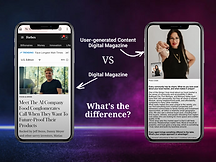
The Next Evolution of Publishing: Why User-Generated Content Digital Magazines Are Not Just Digital Magazines

Running a UGC Digital Magazine From Anywhere in the World

The Economics of Owned Media: Why launching a print magazine and licensing a UGC platform are not remotely comparable

When Your Clients Become the Story: Why Licensing a User-Generated Content Digital Magazine Turns Marketing Into Loyalty

Your Marketing Team Doesn't Work for You. They Work for Mark Zuckerberg and Google

The Anti-Agency Model: How to Grow Without Hiring a Marketing Team

Why I’m Actively Partnering With Brands and Thought Leaders to Launch the Next Generation of Digital Magazines

Why Are You Paying a Marketing Team to Build Someone Else’s Business?

Why UGC Digital Magazines Behave More Like a Social Platform Than a Traditional Magazine

A Marketer’s Guide to UGC Digital Magazines

The UGC Digital Magazine: How I Reimagined the Magazine Business Model

AI Is Moving Faster Than the Media Can Keep Up

Agents - What If Your Community Did Your Marketing for You?
